您当前的位置:首页 > 文艺 > 空也静汉英双语诗集《轮回》序之二
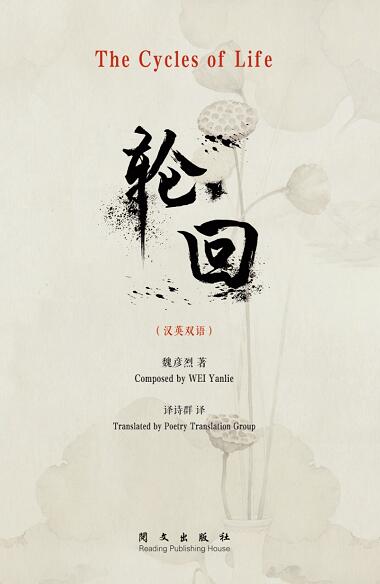
诗魂匠心 译而不损
◎ 晚 枫
第一次接触魏彦烈的诗歌就让我感触颇深。他的诗题材广泛,从大自然到人生,从个体到社会,从美好到讥讽,包罗甚广。无论谁读他的诗,都能在里面找到与切身相关的内容:儿子悼念双亲,公职人员斥责腐败,细心人观察一粒微尘之美,妇人思念夫君……
通常,要想真正理解诗歌的含义,最终实现全面深入的鉴赏,是要花些时间的。然而,读魏彦烈的诗,那种类似苦差的感觉已变成了赏心乐事。这种乐趣的营造,靠的是精湛的技巧、令人耳目一新的构思,加之其特别的表意方式(也许有人会觉得有点怪)。暗喻是他那颗戏谑的诗心永远青睐的手法 ; 多么严肃沉重的话题,他都可以用诙谐甚至嬉戏的语言呈现在读者面前。流氓坏蛋在他的笔下,可以是埋在一箱三层光鲜亮丽的苹果之下的那个烂货;一条狗可以是对势利小人的嘲讽。拟人几乎是他诗歌中屡用不爽的利器,我们日常生活中的平凡简单之物,无论有形与否,到了他的笔下都可以成为谈资——麦子、面条、花朵、树木 …… 一切都可以富有鲜活的生命,揭示一个又一个的哲理。什么都可以说话、做事,生动形象之极,似乎它们都是诗人生活中的老朋友——四季、景致、太阳、月亮、风和雨…… 他可以用同一个标题写出许多首诗;他可以将我们常常视而不见的琐碎小事,观察研究到极致;他 可以把复杂的问题说得那么轻松自在,充满幽默和嘲讽。
鉴于这是一本双语诗集,我认为英语读者的解读程度基本上Preface依赖于英译质量。诗歌翻译本是件吃力不讨好的事,由于语言与文化的差异,诗歌翻译往往不能确切完整地再现原诗,尤其是中英文之间。诗歌在英译过程中损失掉的不仅是涵义,还有音韵之美,因为世界上没有哪两种语言的结构和声音是一模一样的。我认为诗歌中的音韵美,是诗歌传达意义中不可分割的组成部分,节奏、押韵、头韵、行内韵等,都是音韵美的元素。如果一首诗丢失了音乐性的部分,是不是仍可以被称之为诗,是很值得怀疑的。当然,现代自由体诗歌中的格律和押韵元素越来越少,但毕竟还以某种方式保持着节奏感。
虽然魏彦烈的诗歌可谓现代诗,但翻译起来绝非易事。这是因为英汉两种语言的节奏,以及中西方文化有很多的差异,致使
诗歌翻译很难做到音意两全,“丢失”在所难免。魏彦烈的语汇辞藻带有极强的中国北方农民的特色。纵观中国近三十年的城市化进程,城市人口激增,读者中会有不少人经历了由农村到城镇的转化过程,因而带有地方色彩的语言会给读者带来共鸣 , 引起读者对自己生存状态的反思。诗中意象的塑造也多带有文化背景,如佛教、中医,中国北方的气候和生活方式,老百姓世代相传的传统和习俗,等等。英语读者如果没有基本的中国文化和宗教信仰的概念,这些元素会很费解,甚至觉得毫无道理可讲。这种情况下,一些带有文化背景的特殊意象,期望外国读者不但理解其外延,还能理解其内涵,恐怕更是异想天开了。我们不妨用《磷火》举个例子。英语读者印象中的烟斗(pipe)大多会是 15-16 厘米长短的烟斗,类似福尔摩斯用过的那个样子;而中国农民使用的烟斗(应该叫烟袋)大约有 40 厘米或者更长,像旧式的长枪,所以诗中用了“烟枪”一词。这种长柄的烟袋才可以塞在裤腰和棉布裤带之间,而不是放在套子里挂在腰带上。有人也许会说,这种由于细微的文化差异所引起的意象偏移不会影响诗歌本身的意义传达,而实际上,在这首诗中,这种影响确实存在。诗的后面接着谈到“掏出来……吐出憋了一辈子的怨气。”掖在裤腰带里的长杆烟袋要比放进套子挂在腰间的短烟斗的意象,更缺乏空间自由感,而这种被挟制的憋屈营造了需要舒一口气的氛围。
魏彦烈诗歌的音韵美,我认为主要体现在抑扬顿挫的节奏上。气息的巧妙设置,即在什么地方停顿换气,或者说在哪里不换气。诗人通过精心设计切断话语的位置,换下一行,来制造这些独特的气息效果,使诗歌的节奏与自己想表达的内容相得益彰。这也是现代诗歌运用的一个手法。由此,我们可以看到,诗歌传达信息的手段是多维的——文字的外延与内涵、韵式和节奏的声音效果、以及拟人、明喻、暗喻等修辞手法。英译版应该在声音效果上尽量接近原作,以期达到同样的信息传达效果。然而,中英两种语言在句法与语序上都不同,使得译者不得不在诗行之间作必要的调整,因而译文的气息节奏上也会有相应的改变。
集体翻译个人诗集可以说是一个新的尝试,英语读者有可能感觉到有多种类型风格和措辞。这种翻译形式对于保持风格上的
一致性确实是一个挑战,但同时,在效率和经济上有它的优势。诗歌翻译与出版可谓任重而道远。
2019年8月 加拿大
Poetic Charm Not Lost in Translation
◎ By Grace Liu
I was very much impressed by WEI 's poems the first time I read
them. His poems cover a wide range of subjects – from nature to life,
individuals to society, beauty to irony. Anyone who reads his poems
would find something relevant: a son mourning his parents; an official
ranting about corruption; a careful observer finding beauty in a fleck of
dust; a wife missing her husband…
It usually takes time to understand poems to reach full appreciation.
However, the seemingly laborious efforts in achieving the goal is
overtaken by the pleasure from reading WEI's works. The enjoyment
comes from his artful skills, surprising perspectives, and his unique
ways of conveying his points – though some may find them shocking.
Metaphor serves his mind that is always at play. He can pick up an utterly
serious topic and present it in an entirely playful manner. A scoundrel,
under his pen, can be an apple hidden at the bottom of a case with
three layers of good ones on top; a dog can be a mock on the snobs.
Personification is a consistent device employed in his poems. Every plain
object in our day-to-day life, tangible or not, can be made a topic in his
poems. Wheats, noodles, flowers, trees … every abiotic matter can come
alive and manifest a philosophical implication. Everything can talk and
act so vividly that they seem to be close friends in the poet's life: seasons,
landscapes, the sun, the moon, the rain, and the wind… He writes a few
poems under the same title; he investigates trivial experiences that are
often overlooked by most of us; he can present a complicated issue with
great ease, humor, and sarcasm.
As this is a bilingual version of WEI's poems, how English readers
perceive the poems depend, I think, largely on the translation. Poem
translation is a mind-boggling job, arduous and unrewarding, as poems,
more often than not, get lost in translation due to the lingual and cultural
disparities, especially between Chinese and English. In addition, the
musical beauty also gets lost because not a single pair of languages sounds
the same. I believe the beauty of sound in a poem, in terms of rhythm,
rhyme, alliteration, internal rhyme, etc., is an indispensable part of a poem
in conveying its meaning. I wonder whether a poem can still be called a
poem if it loses the melodic element, though modern free verses tend to
carry fewer meter and rhyming elements, they do keep the rhythms one
way or another.
WEI Yanlie's poems are not easy to translate though they are
regarded as free verses. It is the cadences and the cultural disparities that
make the job tricky and thus inevitably both intended meaning and
sound effect can get lost. His diction is mostly colloquial of farmers from
north-western China. In view of the urbanization that has taken place in
China in the last thirty years, his poems bring back many readers their
past and the essence of transition in their existence. The images in WEI's
poems are drawn from Buddhism, Chinese medical practice, climate and
lifestyle in north-western China, as well as customs people have kept for
generations. These components can be strange, meaningless, or making
no sense to English readers who are not familiar with Chinese culture
and religions. It would be more of a wishful thinking that they would
comprehend the connotations of some specific cultural images. Take the Preface
“tobacco pipe” in 磷 火 (phosphorescent-light, literally) for example,
English readers may imagine a smoking pipe of six to seven inches in
length, like the one Sherlock Holmes had, while in reality, the pipe a
Chinese farmer uses has a long stem of 15 inches or even longer, making it
a more closer a resemblance to an old rifle gun that one can actually stick
between his pants and belt – with the latter made of twisted cotton band
– rather than hanging on the belt in a sheath. One may argue that when
a poem is translated into another language, the difference in perception
of the poetic image due to cultural background does not hinder what the
poet intends to convey. But here it does. The lines followed talk about
taking out the pipe and “vent
his grievance pent up all his life.” A long-stemmed gun-like pipe
tightly wedged inside the waistband would have much less freedom than
a short pipe in a sheath dangling from the belt. And this lack of freedom
creates the setting for the need of ventilation.
Much of the sound beauty in his poems lies in the cadence. It has
to do with breath – where you pause or rather do not pause at all. The
intended interruptions are realized by breaking a line at a specific point,
guiding the readers to the poetic rhythm impact the poet wants to create,
which is one of the techniques modern verses employ. This way, a poem
passes its message in multi dimensions: denotation and connotation of
written words, sound effects from rhyming and rhythms, and rhetorical
devices like personifications, metaphors, similes, etc. For the English
version, translators should strive to bring the sound effects closest to that
of the original. However, due to the differences in syntax and sentence
order between English and Chinese, it is often a practice of compromise
to shift lines, which may lead to changing the breath of a poem.
This bilingual collection of WEI Yanlie's short poems might be
the first attempt of poem translation by a group of translators. Readers
may find a variety of styles and diction preferences. This new method of
compiling a bilingual poem collection is a challenge to style consistency,
but it has the advantages in efficiency and economic considerations. We
have a long way to go in poem translation and publication.
August 2019, Canada

晚 枫(Qun Grace Liu) 原名刘群,曾任北京语言学院(现北京语言与文化大学)英语教师,自由翻译职业,爱好诗歌创作与翻译。在《世界诗人》《诗殿堂》《诗历》《大风诗歌》《中国当代诗歌导读(2010 卷)》等刊物发表多篇创作和翻译作品。另出版有英译新编历史剧《黄叶红楼》以及合编翻译教材《汉英笔译全译实践教程》。

相关阅读

热门图片